
Donegal is under attack from a fast-spreading plant that causes considerable damage to concrete surfaces, threat native plants and animals, and which can block flood defences and water channels.
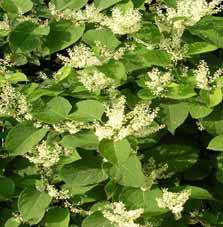
Invasive species – Japanese knotweed
Japanese Knotweed is now a major problem in the county – and action plans are being put in place to try and stop it from spreading further.
The Department of the Environment is now liaising with local councils in a bid to curtain its spread.
And the message is: “Do not cut! – Avoid and report.”
Donegal Co. Council is asking people to report the location and extent of any infestation to their local area engineer.
John McLaughlin, Director of Service, Roads and Housing Capital told a recent Council Strategic Policy Committee meeting: “The first thing is to stop it spreading. Something less than the size of your nail can re-grow,” he revealed, adding that it may need to be buried seven feet deep to stop its spread. It can also be sprayed, or injected.
Originally introduced as an ornamental plant in the nineteenth century from Japan, it is now causing major headaches for local authorities, and also a growing number of householders and farmers.
The National Roads Authority (NRA) has appointed consultants to identify the best ways of destroying the species.
It has been reported that in Britain Japanese Knotweed is causing over €200m worth of damage annually.
(Source – Donegal Now – Chris Ashmore – 24/02/2016)

Japanese Knotweed
Fight In Fermanagh To Stop The Monster Plant
Fermanagh is under attack from a foreign plant that can bring down buildings and only gets stronger when cut.
Commonly found along roadsides and river banks, Japanese Knotweed can cause structural damage to concrete and devalue homes. The invasive species has been in the county for some time, however for many years efforts to tackle the growing problem simply caused the plant to spread even faster and further.
John-Ross Armstrong from Greentown Environmental in Florencecourt, specialists who work with the Roads Service treating the problem, and treats it all over the country from Belfast to Kerry.
He explained how knotweed was introduced to the UK and Ireland in the nineteenth century by plant collectors, and while not harmful in its native environment, because no insects or creatures feed on it here it has grown out of control.
“There’s lot of it in Fermanagh,” he said. “We’ve had about 60 sightings on local road verges. If you leave it alone it will out-compete our own plants, and it has the potential to cut through concrete. It dies away in winter, and returns around April, and it can grow up to three meters in six months, but it’s like an iceberg in that its roots spread even further under the ground. The roots can be seven metres wide and three metres deep.”
Mr Armstrong said if anyone suspected they had knotweed growing on their land, they should contact either Greentown Environmental or the Council.
“The first thing people need to know is don’t cut it!” he warned. “It produces a seed but it won’t germinate if it’s left alone. Cutting or moving it is what spreads it. That’s why its so common along the roads. For years the Roads Service was flailing it, making grow and spread. It won’t get worse if it’s not moved or cut.
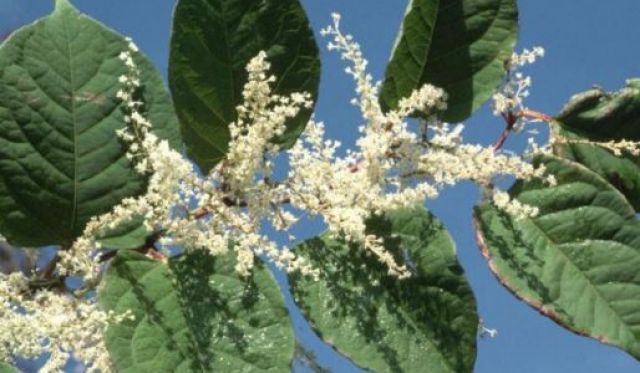
Japanese Knotweed
“Five years ago the Council was still cutting it, but now there is a government strategy in place and now it’s actually an offence to move or cut it.”
A spokesman for Fermanagh and Omagh District Council said they had a programme in place to deal with the problem, including employee training on identification and suitable treatments for key invasive species such as knotweed, as well Himalayan balsam, giant hogweed, zebra mussel, and pondweeds, which are also common locally.
“Japanese knotweed and other knotweeds are widespread throughout the Fermanagh and Omagh district,” they said. “It’s commonly found along road sides and riverbanks as hedge-cutting and river currents are two common vectors for their spread. It is also sometimes found on vacant land, private gardens and on public ground.”
Fermanagh and Omagh District Council encourages people to report any sightings of invasive species to the Council’s Biodiversity Officer by telephoning 0300 303 1777.
(Source – Fermanagh Herald – 27/03/2016)
Kerry Based Project Is Tackling The Scourge Of Japanese Knotweed
One of the most intriguing stands I came across at the Ploughing was the Japanese knotweed survey and awareness project.
Japanese knotweed is an alien invasive species that has no place in the ecosystem of Ireland. Since it was introduced as an ornamental plant in the 19th century, it has spread relentlessly across the island causing economic and environmental problems.
Native broadleaf woodlands are under threat as young saplings cannot compete for light. In the long term, the forests will fail to regenerate and with their loss comes the loss of many species that rely on them.
As it spreads along hedgerows and rivers, it breaks up the last remaining corridors for native plants and animals, dangerously reducing their habitats and gene pools.
It has become a very costly plant for the building industry. The cost of eradication before construction can be very high. It cost Kenmare hospital in excess of €100,000 to eradicate it.
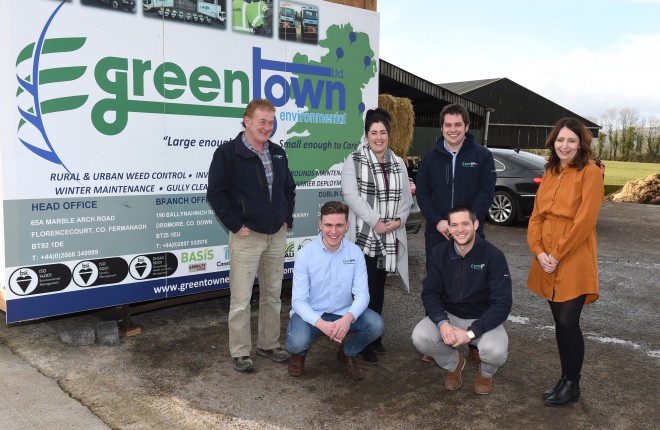
The team at Greentown Environmental, from left, Ken McTaggart, Ciaran Owens, Katie McLaughlin, John Ross Armstrong, James McGrath and Donna Kerr
The cost to the London Olympics to remove Japanese knotweed from the four hectare Olympic site cost more than £7m (€9.4m).
Any small piece of root or any knot on the stem will regrow. The roots can spread up to nine metres from the visible plant and three metres below. The most effective way to control it is to prevent spread. This means do not dig, do not cut, do not disturb.
Tackling it at the right time gives you the best chance of wiping it out. Optimum control will be achieved by treatment with glyphosate after flowering but before dieback.
The driving force behind this remarkable project is Jane Jackson who holds a degree in Environmental Science from the Open University. She launched the Japanese knotweed survey and awareness project in 2013 on the Dingle peninsula.
The project is working to curtail the spread of this species by mapping its extent throughout Ireland. The project is also raising awareness on how to prevent the spread of Japanese knotweed.
The project is carried out by volunteers with the support of Kerry County Council, the Heritage Council and Transport Infrastructure Ireland.
The project volunteers carry out a detailed survey between late spring and autumn. They record and date the sightings with GPS and photographs.
They also record any pertinent information. This is then put onto a map and made available on a website. All map data is shared with the National Biodiversity Data Centre.
Contact Jane Jackson on 086-1045979, email: kerryjapaneseknotweed @gmail.com www.knotweedsurvey.ie.
Steven Meyen, Forestry Adviser Teagasc
steven.meyen@teagasc.ie
(Source – Irish Independent – Indo Farming – Steven Meyen – 07/10/2015)